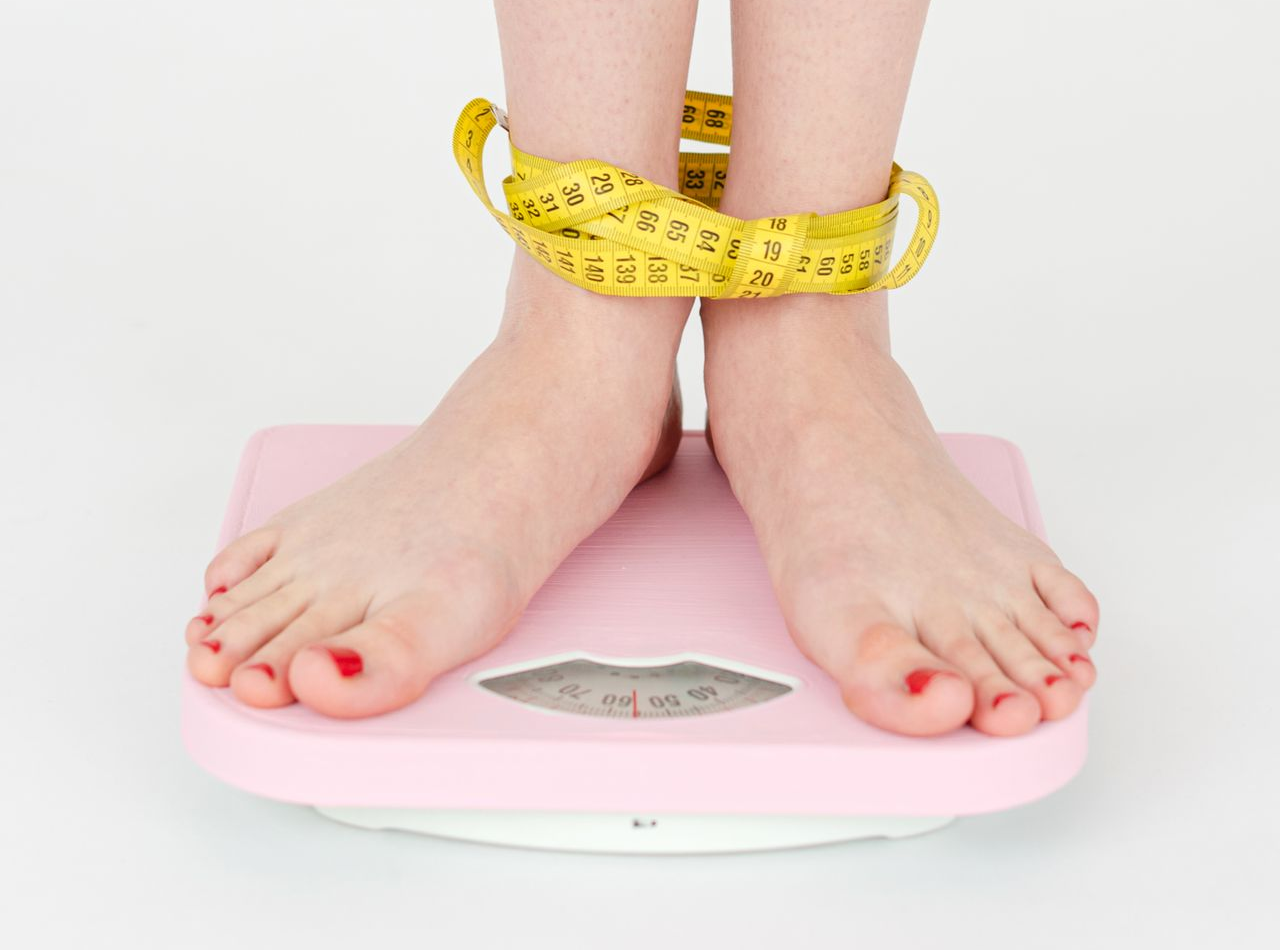

Of course, you can type into Google: BMR (basal metabolic rate) and TMR (total metabolic rate), enter your parameters, and the result will pop up.
I would like you to know exactly where these results come from and what each of them means. A little education and additional knowledge can't hurt, right?
BMR ( basal metabolic rate) – the lowest level of energy metabolism that determines the supply of energy necessary to maintain basic life functions in optimal living conditions.
Simply put, the BMR indicates how many calories you should consume per day to maintain basic life functions (breathing, maintaining normal body temperature, cell growth, and the functioning of all systems and organs).
In nutrition, specific formulas are used to calculate basal metabolic rate. The most popular ones include the Hariss-Benedict formula and the Mifflin-StJeor formula. Many online tools, such as the BMR calculator, have been developed based on these formulas.
Harissa-Benedict pattern:
PPM (women) = SWE= 655.1 + (9.563 x weight [kg]) + (1.85 x height [cm]) – (4.676 x [age])
PPM (men) = SWE = 66.5 + (13.75 x weight [kg]) + (5.003 x height [cm]) – (6.775 x [age])
SWE - resting energy expenditure kcal
Mifflin-St Jeor formula:
PPM for women = (10 x body weight in kg) + (6.25 x height in cm) – (5 x age in years) – 16
A man's BMR = (10 x body weight in kg) + (6.25 x height in cm) – (5 x age in years) + 5
You've already calculated PPM, so now it's time for CPM😊
CPM(total metabolic rate), or TEE (Total Energy Expenditure), which consists of PPM and all activities during the day: studying, working, playing sports, cleaning, walking, etc.
The PAL coefficient, or Physical Activity Level, is used to calculate CPM.
The physical activity coefficient is:
1.0–1.2 – for a sick person who is bedridden and does not engage in any physical activity,
1.2–1.4 – for a person who exercises sporadically (1–2 workouts per week) and has a sedentary job,
1.4–1.6 – for a person with moderate physical activity, 2–3 workouts per week, and whose work is sedentary in nature,
1.6–1.8 – for a person who exercises at least 4–5 times a week and has a sedentary job,
1.8–2.0 – for people who exercise daily and do physical work,
2.00–2.40 – for very active people who do physical work or play sports professionally.
In summary, total metabolic rate consists of basal metabolic rate (BMR) multiplied by physical activity level (PAL).
CPM = PPM x PAL
You already know how much energy your body needs during the day. But you want to improve your body parameters, reduce your weight and body fat.
In theory, it is assumed that you should subtract about 300-400 kcal from your CPM to achieve a so-called rational and healthy reduction. Then, once you have done that, you will need to adjust your macronutrients, i.e., protein, fat, and carbohydrates (including fiber).
I would like to point out that these are general guidelines, as everyone has a different style and lifestyle and trains at different frequencies.
Nutrient requirements:
Percentage of energy from nutrients in the adult diet:
•Protein – 18–28%
- lower limit: includes people who are physically inactive or train very irregularly,
- middle: includes people who train 3-4 times a week
- upper limit applies to people who train at least 5-6 times a week plus competitive athletes
•Fats – 20-35%
Fats are essential for the proper functioning of the body and should not be drastically reduced. However, attention should be paid to the type of fats consumed. The basis should be unsaturated fats, which are found in plant products, fatty sea fish, and vegetable oils. However, it should be noted that saturated fats are also acceptable, but no more than 10% of total energy intake, of which only 1% may be trans fats.
•Carbohydrates – 45-60%
It depends on how your body reacts to a given amount of carbohydrates. However, I believe that if you want to reduce body fat, the amount of carbohydrates should be no more than 50%. However, it is worth noting that your diet should include at least 25 g of fiber per day, and your plates should be full of vegetables and fruit (minimum 400 g/day).
I hope that this article will make it much easier for you to calculate your energy requirements and macronutrient intake. If you have any questions, you can always schedule a consultation.
Bibliography:
1. RzęsośA.: Diet and nutritional status of patients with obesity. Doctoral thesis, Poznań 2013 [online access]
2. Włodarek D., Lange E., Kozłowska L., GłąbskaD.: Diet Therapy. PZWL, Warsaw 2015.
3. Ciborowska H., Rudnicka A.: Dietetics. Nutrition for healthy and sick people. PZWL, Warsaw 2015.
4. Jarosz M. et al.: Nutritional standards for the Polish population and their application. National Institute of Public Health – National Institute of Hygiene, 2020.
5. Fats in an athlete's diet - National Center for Nutrition Education (pzh.gov.pl)
6. Updated WHO guidelines on fats, saturated and trans fats, and carbohydrates (pfpz.pl)

.jpg)